The Art of the Bet: Roulette Strategies in Focus During October 2026
Avery Fischer · Oct 19, 2026
The Art of the Bet: Roulette Strategies in Focus During October 2026
Players approach roulette with a range of methods that focus on bet selection, bankroll allocation, and wheel type selection, and data from regulatory reports continues to track how these choices play out across online and land-based venues. European wheels with a single zero maintain a house edge of 2.7 percent while American variants add a double zero that raises the edge to 5.26 percent, and observers note that many participants select the European layout when available because the lower edge remains consistent regardless of betting pattern.
Core Betting Systems Documented by Players
Systems such as Martingale rely on doubling the stake after each loss to recover prior amounts with a single win, yet long-term records from casino operators show that table limits often interrupt the progression before recovery occurs. Fibonacci sequences apply additive steps where each bet equals the sum of the two preceding ones, and participants who follow this method adjust stakes according to wins and losses while the underlying probability distribution stays unchanged. D'Alembert progression increases or decreases the wager by one unit after losses or wins respectively, and analysts examining session logs find that this gentler adjustment reduces the speed at which bankrolls diminish compared with steeper progressions.
Labouchere sequences require players to write down a row of numbers and cross them off as targets are met, with the next bet equaling the sum of the outer numbers remaining on the list. Research published by academic institutions indicates that these cancellation systems produce variable session lengths yet do not alter the fixed house advantage built into the wheel and payout ratios. Flat betting, by contrast, maintains the same stake size throughout a session, and records from multiple jurisdictions reveal that this approach extends playing time for participants who prioritize duration over rapid stake changes.
Bankroll Management Practices Observed in 2026
Operators and analysts recommend setting strict session limits before play begins, and October 2026 figures from gaming authorities in several regions show that participants who predefine loss thresholds tend to record shorter average session durations. Dividing total bankroll into smaller units, often 1 to 2 percent per spin, allows players to withstand sequences of losses that occur naturally due to the independent nature of each wheel spin. Tracking wins and losses in real time helps individuals recognize when a chosen method has reached its intended boundary, and software tools supplied by licensed platforms now display running totals that update automatically after each outcome.

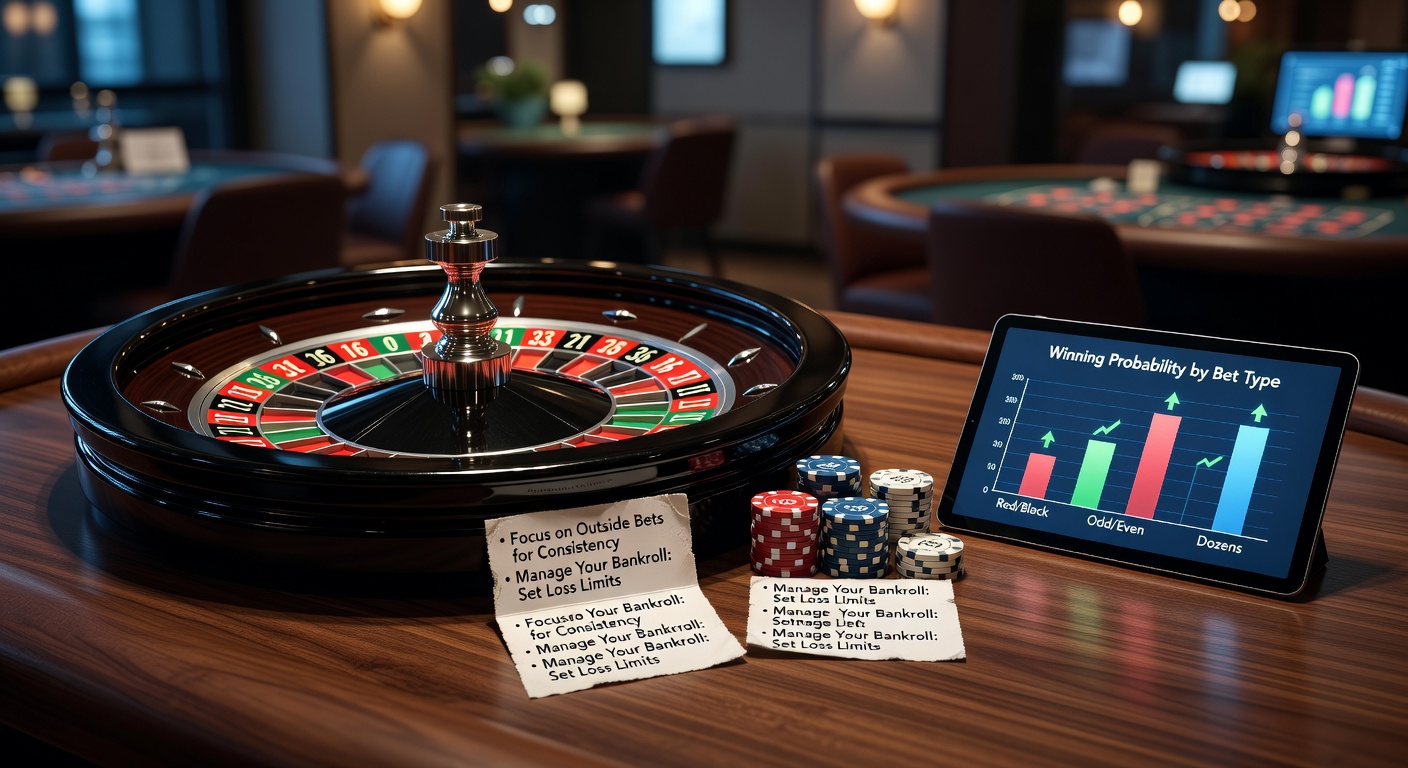
Many venues provide historical spin data that some players review before selecting inside or outside bets, although each spin remains independent of previous results. Outside bets such as red/black or odd/even offer nearly 50 percent probability on a European wheel while paying even money, and inside bets on single numbers deliver higher payouts at correspondingly lower hit rates. Participants who combine both categories within the same session adjust exposure according to current bankroll position rather than attempting to predict future outcomes.
Wheel Selection and Platform Features
Choice between single-zero and double-zero wheels directly influences long-term return percentages, and data compiled by the Nevada Gaming Control Board continues to separate performance metrics by wheel type across reporting periods. Live dealer interfaces introduced in recent years stream physical wheels to remote participants, and statistics released by industry monitoring groups indicate rising participation in these formats during 2026. Mobile applications now incorporate quick-bet buttons and automated progression trackers, allowing users to apply chosen methods without manual calculation between spins.
Some platforms offer customizable table limits that accommodate both conservative and aggressive stake progressions, while others enforce uniform minimums that affect how quickly certain systems can unfold. Players comparing multiple sites often examine payout speed and game variety alongside the specific roulette variants available, and October 2026 listings show an increase in hybrid tables that combine RNG and live elements within single sessions.
Additional Considerations Reported by Operators
Time spent at the table correlates with total exposure, and session logs from regulated operators demonstrate that extended play increases the cumulative effect of the house edge even when short-term results fluctuate. Setting win targets alongside loss limits provides a defined exit point, and participants who follow both parameters record more consistent session lengths according to aggregated platform data. Some studies from university research centers have examined cognitive biases that influence bet sizing after wins or losses, and findings suggest that awareness of these tendencies supports adherence to pre-set plans.
Regulatory frameworks in multiple jurisdictions require clear display of game rules and payout ratios, and operators must maintain records that allow verification of random outcomes. Participants who review these disclosures before engaging with any strategy gain clarity on the fixed parameters that govern every spin. Tools that simulate long sequences of play illustrate the mathematical expectation over thousands of trials, and such demonstrations remain available on several educational sites maintained by gaming associations.
Conclusion
Documented approaches to roulette center on structured betting patterns, disciplined bankroll allocation, and informed wheel selection, while statistical records confirm that no method modifies the inherent house advantage. October 2026 data from diverse regulatory sources continues to track participation trends across formats, and players who apply consistent limits alongside chosen tactics maintain control over session parameters. External resources such as reports from the Australian Gambling Research Centre supply additional context on player behavior that remains relevant to current practice.